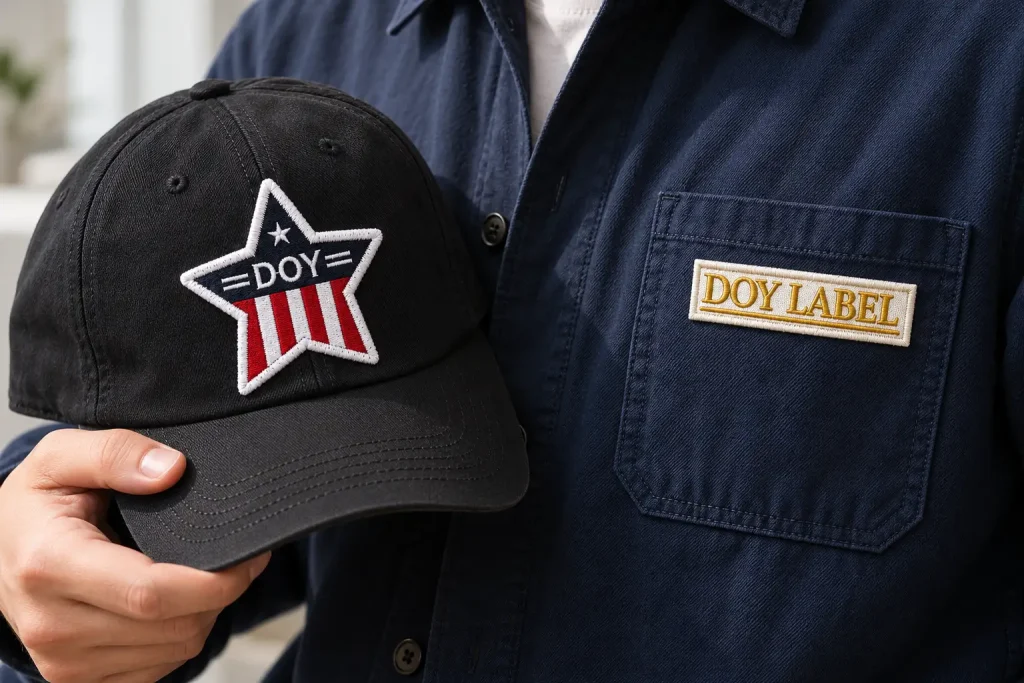
Custom embroidered patches are made by converting artwork into stitch instructions, embroidering the design onto a fabric base, and completing the required edge and backing treatments. Sampling and quality checks help ensure the finished patch matches the agreed design and specifications.
For apparel brands, uniform suppliers and patch distributors, understanding this process helps explain why artwork, stitch planning and finishing all affect the final result.
1. Artwork Review: Preparing the Design for Embroidery
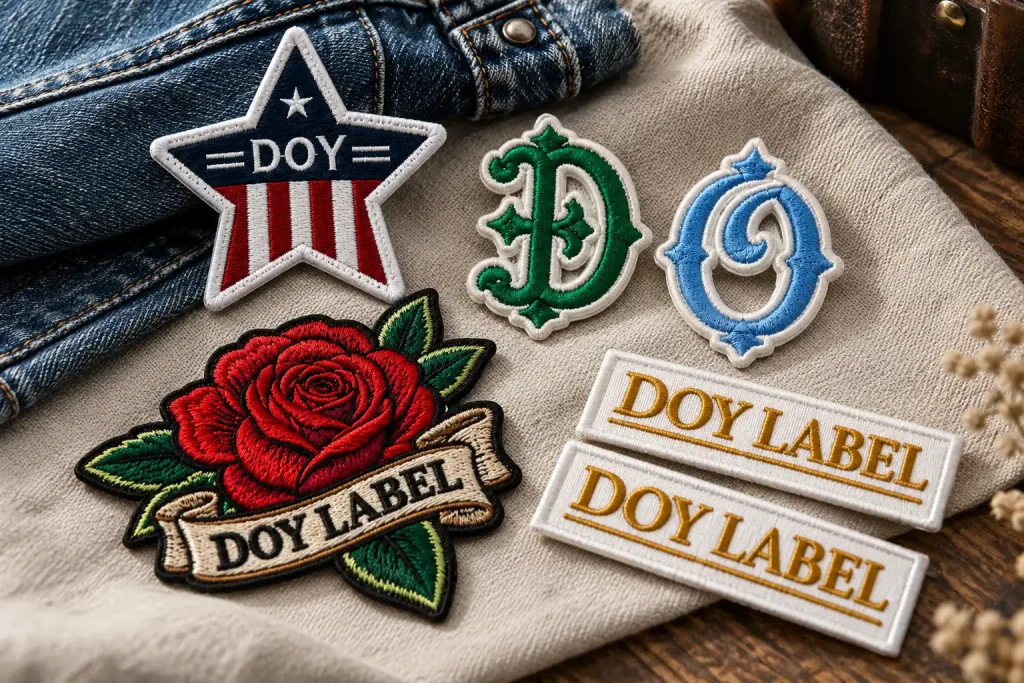
Production starts with a logo, drawing or existing patch reference. The artwork is reviewed at the intended finished size, with attention to its shape, lettering, line thickness, spacing and colors.
Embroidery uses thread rather than ink. Details that look sharp on a screen may become unclear when stitched, especially small letters, thin outlines and closely spaced elements.
Adjustments may include enlarging lettering, opening narrow gaps or simplifying fine details. The aim is to preserve the design’s identity while making it suitable for embroidery. For more on preparing logos for manufacturing, see our design services.
2. Embroidery Digitizing: Turning Artwork into Stitches
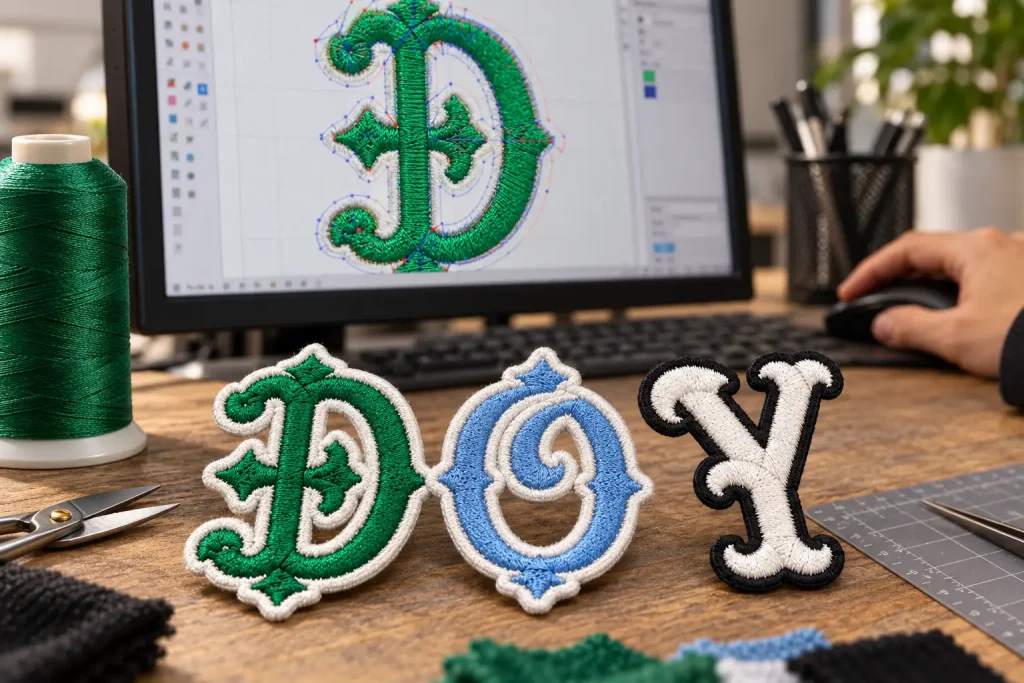
Digitizing creates the instructions that guide the embroidery machine. It involves more than saving an image in a different file format.
The digitizer plans:
Stitch types: such as running, satin and fill stitches.
Stitch direction and sequence: how each area is built and how the machine moves between elements.
Density and underlay: the coverage and supporting stitches needed for a stable result.
Pull compensation: adjustments for the way stitches draw fabric inward.
These decisions influence lettering clarity, surface texture, coverage and shape. Excessive density can create stiffness or puckering; insufficient coverage can leave unintended gaps.
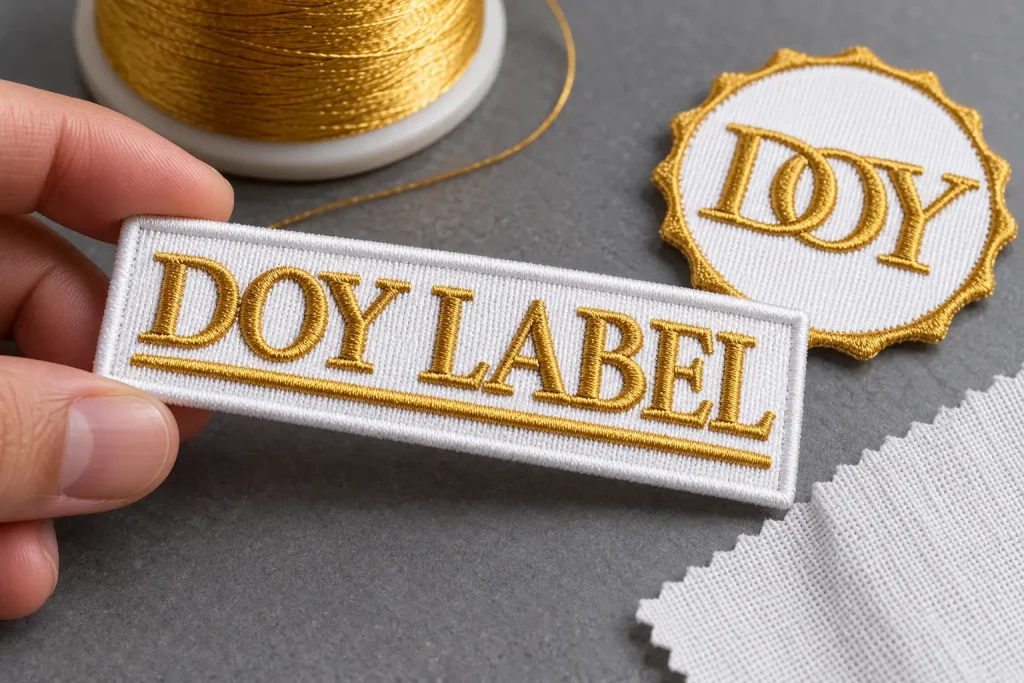
3. Sampling: Checking the Stitched Result
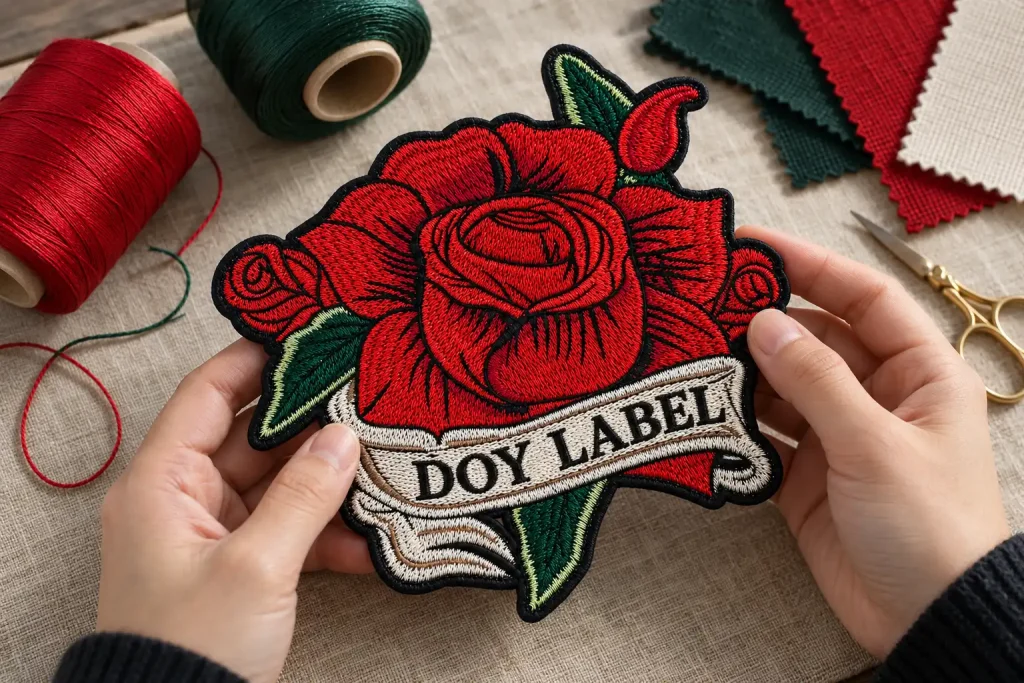
A sample tests how the digitized design performs with the selected fabric and thread.
The stitched result is checked for dimensions, proportions, spelling, color selection, detail definition and flatness. Sampling may reveal issues that a digital preview cannot fully show, such as crowded lettering or uneven coverage.
Where necessary, the stitch file, materials or machine settings are adjusted before another sample is evaluated. An approved sample provides a physical reference for bulk production.
4. Bulk Embroidery: Maintaining Production Consistency
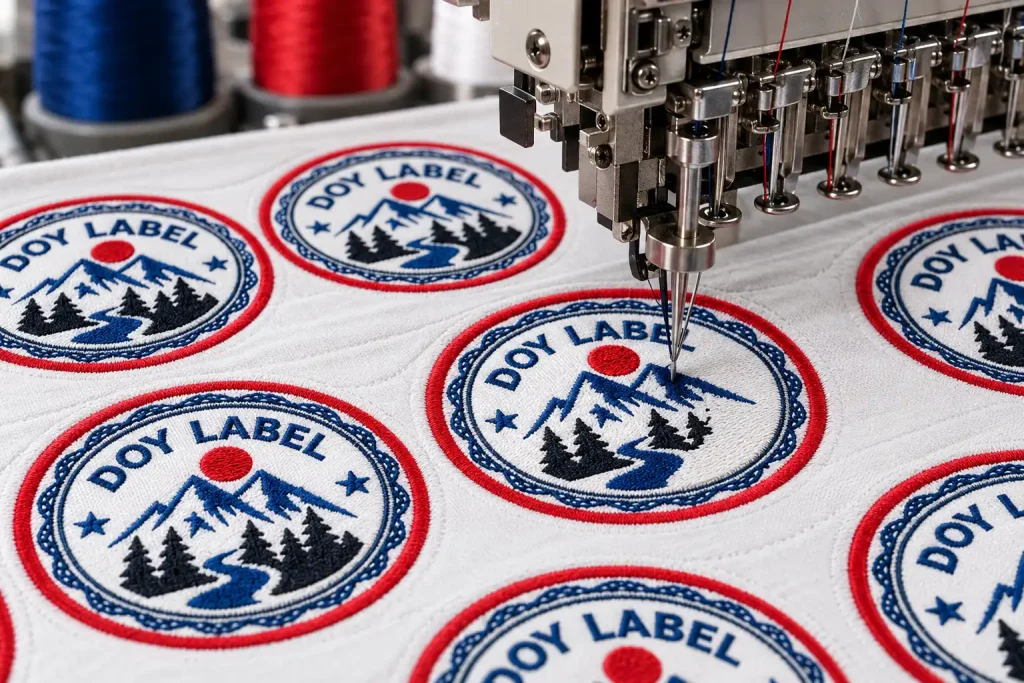
Once the sample and specifications are confirmed, bulk embroidered patches are produced using the agreed construction.
The base fabric and stabilizer support the design during stitching. Machine setup, thread tension, fabric positioning and needle condition all influence consistency.
Checks during production help identify thread breaks, missing stitches, registration problems and distortion. Detecting these issues early helps prevent the same defect from continuing across a batch.
5. Edge Finishing and Backing: Completing the Construction
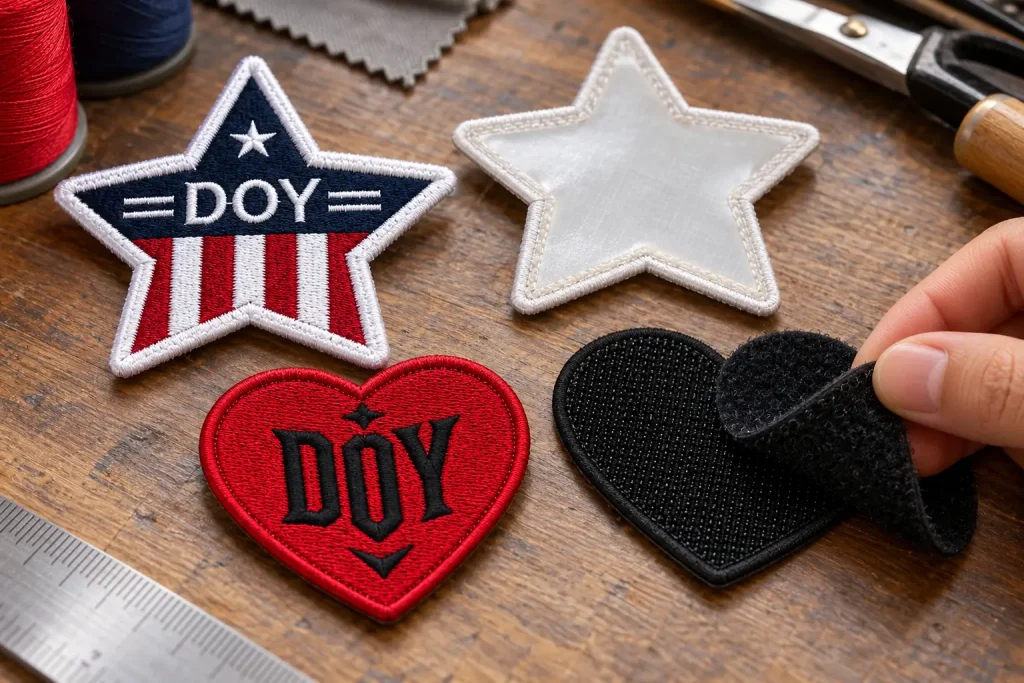
Edge treatment defines the patch outline and helps protect the perimeter.
A merrowed edge wraps thread around the outer edge and commonly suits simple shapes. A cut edge with an embroidered border can accommodate more detailed contours. The appropriate method depends on the outline, materials and intended appearance.
Backing is selected according to the attachment method:
| Attachment | Construction consideration |
|---|---|
| Sew-on | The patch is prepared for stitching onto the item. |
| Iron-on | A heat-activated adhesive layer is added for application to compatible fabrics. |
| Self-adhesive | A pressure-sensitive adhesive is added for suitable surfaces and intended uses. |
| Hook-and-loop | A fastening layer enables removal from a compatible mating surface. |
Cutting, border finishing and backing application may occur in different sequences depending on the patch construction. For heat-applied patches, compatibility should be tested on the actual garment.
6. Quality Inspection, Packing and Shipping
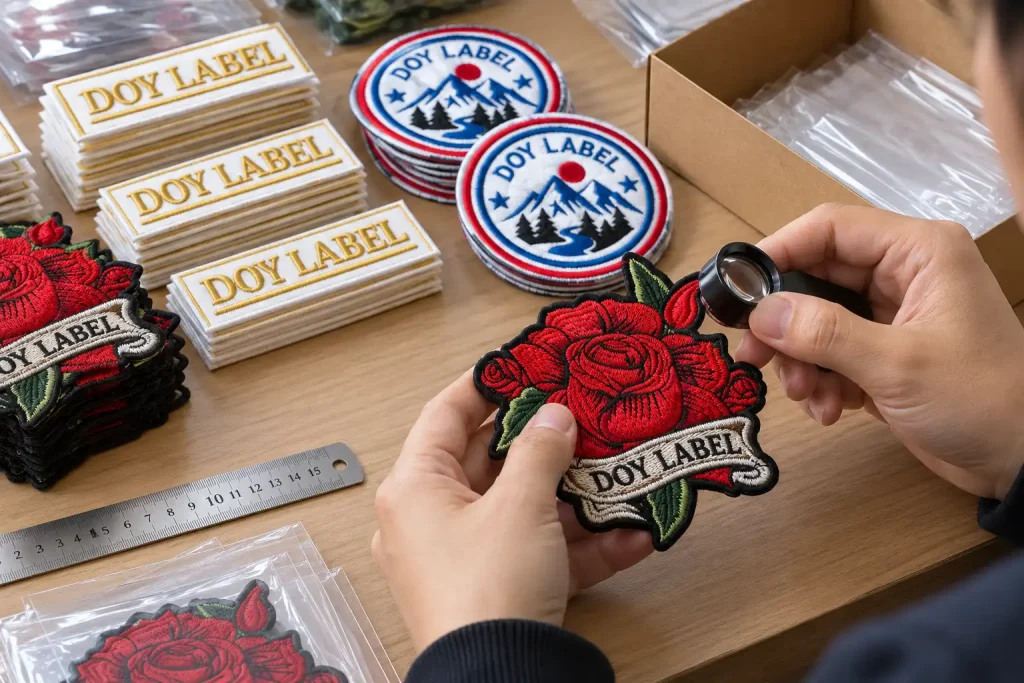
Quality control takes place during production and before finished patches enter storage or are packed.
Inspection focuses on the agreed specifications and sample: dimensions, shape, thread colors, stitch quality, border finish, backing and overall appearance. Loose threads, incomplete stitching and visible contamination also need attention.
Finished patches are counted and packed according to the agreed requirements before dispatch. Our factory overview provides further context on production and quality-control support.
Frequently Asked Questions
Can a JPG or PNG logo be used to make custom embroidered patches?
Yes. A clear image can serve as the artwork reference, although vector artwork makes outlines and lettering easier to inspect. Both still require embroidery digitizing before machine production.
Can embroidered patches reproduce small text and fine details?
There are practical limits. Readability depends on finished size, font, thread and stitch construction. Enlarging lettering, increasing spacing or simplifying details may be necessary.
Is a digital proof enough to approve bulk embroidered patches?
A digital proof helps confirm layout and spelling. A stitched sample provides a more reliable reference for texture, detail definition and flatness, particularly for designs with small lettering or critical visual requirements.
Can embroidery thread match Pantone colors exactly?
Pantone references communicate the intended color, but an exact thread match may not be available. Physical thread samples or stitched samples provide a better basis for color approval than a screen alone.
Does changing the patch size require new digitizing?
It may require adjustments rather than simple scaling. Stitch density, lettering and narrow gaps should be reassessed at the new size, followed by a sample check where needed.